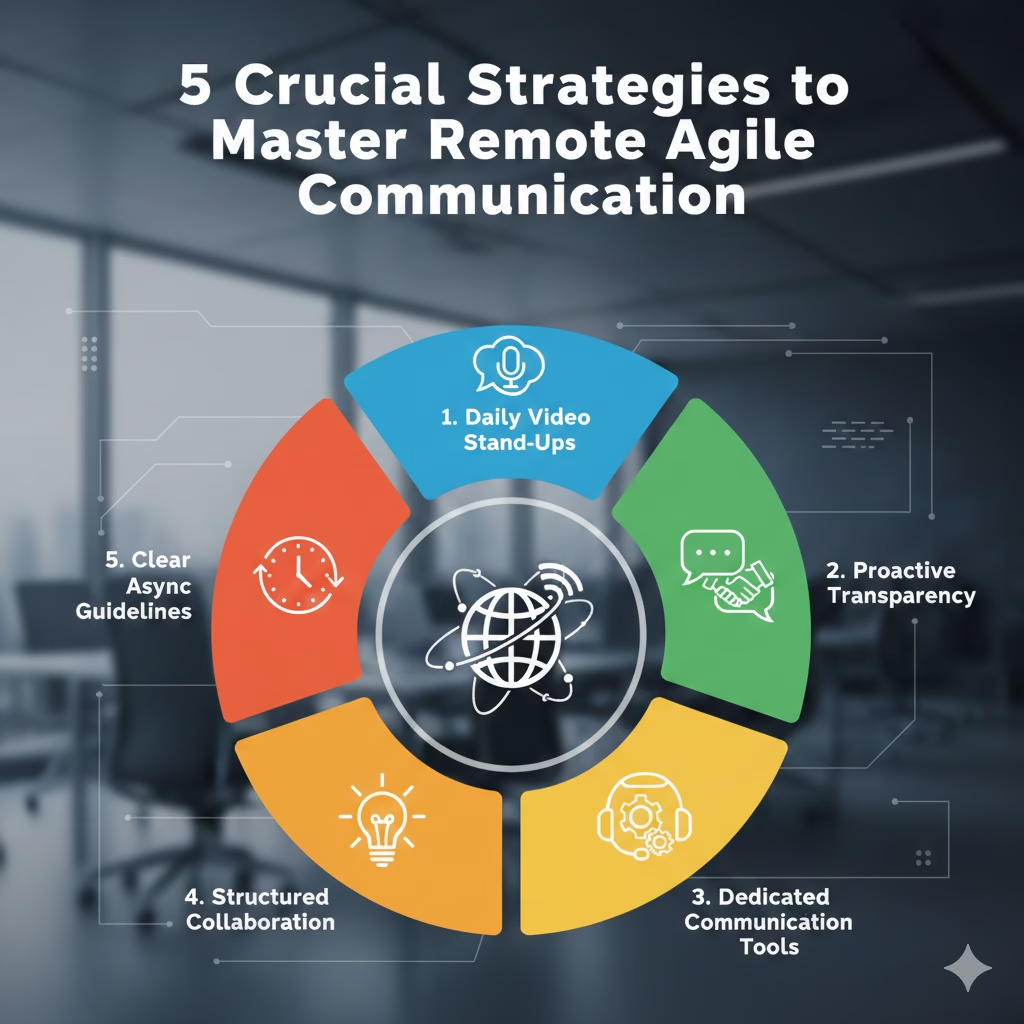
5 Crucial Strategies to Master Remote Agile Communication
In the era of distributed work, team communication has become a high-stakes balancing act. According to Gartner’s 2022 research, 76% of hybrid and remote knowledge workers report communication challenges that directly impact project productivity and team cohesion.
Imaging a scenario where critical project details get lost in translation, deadlines slip, and team morale plummets, this is the silent productivity killer lurking in remote Agile environments. Here’s how project managers and team leaders can achieve seamless collaboration with practical, strategic communication approaches.
Implement Structured Communication Rhythms
Design a communication framework that transcends geographical boundaries. Start by establishing clear, predictable communication touchpoints that accommodate different time zones. This might include:
– Daily 15-minute stand-up meetings using video conferencing
– Weekly detailed progress reports
– Bi-weekly retrospective sessions
A study by Harvard Business Review found that teams with structured communication protocols increase productivity by up to 30% in remote settings.
Leverage Digital Collaboration Ecosystems
Choose and master collaboration tools that create transparency and reduce communication friction. Implement a unified digital workspace that includes:
– Kanban boards for visual project tracking
– Slack or Microsoft Teams for real-time communication
– Asynchronous update channels for global team members
According to a Buffer report, 94% of successful remote teams use multiple communication platforms strategically.
Cultivate Virtual Team Connection
Remote doesn’t mean distant. Intentionally design opportunities for informal interactions that build trust and team chemistry:
– Monthly virtual coffee breaks
– Online team-building games
– Shared digital spaces for non-work conversations
Research from MIT Sloan Management Review indicates that teams with strong interpersonal connections are 50% more likely to overcome complex challenges.
To immediately improve your remote team’s communication:
1. Audit your current communication tools and protocols
2. Schedule a team workshop to redesign communication strategies
3. Implement a 30-day communication experiment with clear metrics
Your turn! Share your remote communication success stories and challenges in the comments. By learning from each other, we can transform distributed teams into high performing, connected units.
Remember: Great communication isn’t about technology, it’s about human connection, clarity, and shared understanding.