
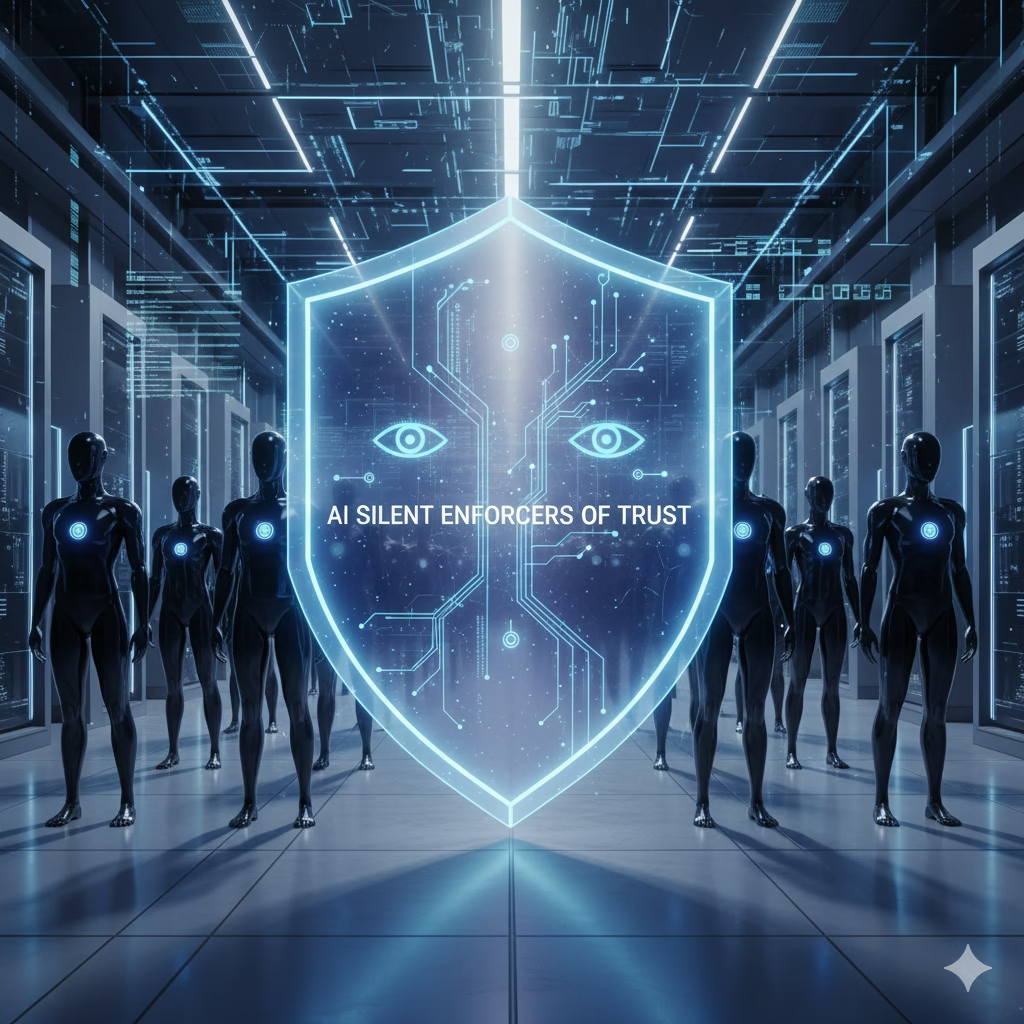
AI Co-Pilots as Silent Enforcers of Trust
In the labyrinth of remote work, trust has become the most elusive currency. Gartner’s 2024 research reveals that 47% of distributed teams struggle with maintaining genuine collaboration and team cohesion. Imagine a world where technology doesn’t just monitor, but genuinely empowers, where artificial intelligence becomes a silent guardian of team dynamics, not a watchful overlord. Here’s how project managers can transform team productivity with privacy preserving AI co-pilots that boost efficiency and trust with cutting-edge, non-invasive strategies.
Revolutionize Team Insights with AI Collaboration
Traditional management approaches often create a surveillance culture that erodes team morale. AI co-pilots represent a paradigm shift, intelligent tools that provide actionable insights without compromising individual privacy. According to Microsoft’s Enterprise Trends Report (2025), organizations implementing AI-assisted management have seen up to 63% productivity gains while maintaining team autonomy.
Deploy Intelligent Monitoring Strategies
Intelligent AI tools like Microsoft Teams Copilot and wAnywhere are transforming how teams collaborate. These platforms automatically: Summarize meeting key points, Track project progression without invasive monitoring, Detect potential communication bottlenecks, Provide anonymized team performance insights.
Implement Ethical AI Integration
Successful AI co-pilot deployment requires a strategic approach: 1. Select tools with robust privacy protocols, 2. Establish clear ethical guidelines, 3. Train teams to view AI as a collaborative partner, 4. Conduct regular audits of AI insights
Case Study: Tech Innovations Inc.
Tech Innovations Inc. implemented Microsoft Copilot across their distributed teams, resulting in 40% faster project completion rates, Reduced micromanagement, Improved team communication, Enhanced work-life balance for remote employees.
Actions for Project Managers
1. Schedule a team workshop to discuss AI collaboration tools
2. Pilot Microsoft Teams Copilot in one project
3. Gather anonymous team feedback on AI insights
4. Create an ethical AI usage policy
The future of work isn’t about surveillance, it’s about empowerment. AI co-pilots represent a revolutionary approach to team management, transforming oversight into genuine support.
Share your experiences with AI collaboration tools in the comments! How have intelligent technologies changed your team’s dynamics? Your insights could help other project managers navigate this exciting technological frontier.