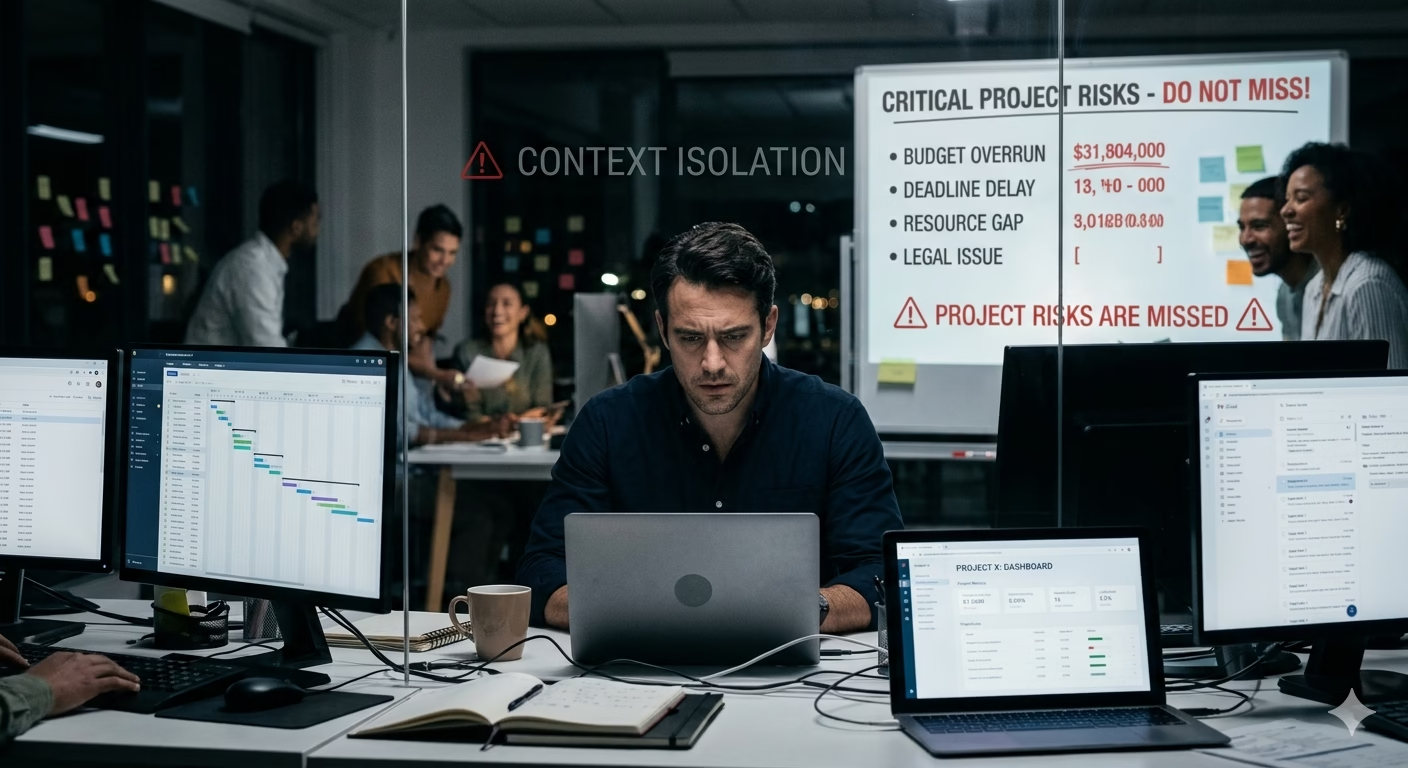
The Lonely PM: How ‘Context Isolation’ Causes Project Managers to Miss Critical Risks in Remote Teams
You’re staring at your status updates, your Slack channels, and your project dashboard. Everything looks green. Your team is hitting deadlines, communication seems healthy, and yet something feels off. Three weeks later, you discover that your lead developer has been quietly job hunting, two team members haven’t spoken in days despite needing to collaborate, and scope creep has silently ballooned your timeline by 40 percent. You missed all of it. This is the paradox of remote project management: you have more visibility into work outputs than ever before, yet you have less visibility into the human reality that determines whether projects actually succeed. According to a 2023 survey by McKinsey, 35 percent of remote workers report feeling disconnected from their teams (McKinsey & Company, 2023), and for project managers, this disconnection translates directly into missed risks. Here’s how you can identify and eliminate context isolation with practical, sustainable strategies.
What is Context Isolation?
Context isolation is what happens when you lose access to the informal information flows that once happened naturally in physical spaces. In a traditional office, you overhear conversations by the coffee machine. You notice when someone is stressed by their body language in meetings. You catch the quick sidebar conversations that reveal emerging conflicts or concerns. You sense the mood of the room without anyone explicitly telling you that morale is tanking.
Remote work strips away these ambient signals. You see structured messages, scheduled meetings, and documented deliverables. What you do not see is the frustration in someone’s voice during a quick call. You miss the eye roll that signals disagreement. You cannot read the room because there is no room to read. Research from Harvard Business School found that remote teams lose approximately 40 percent of informal communication compared to co-located teams (Harvard Business School, 2022), and this gap is exactly where critical project risks hide.
Context isolation does not mean your team is hiding things deliberately. It means that the human signals your brain evolved to detect are simply absent from digital channels. You have to build new systems to capture what you used to absorb passively.
The Risk Blind Spot: What You Cannot See Will Hurt Your Project
When context is missing, risk detection suffers catastrophically. Consider what happens when team friction develops. In an office environment, you notice it immediately. Two people who normally collaborate stop making eye contact. Emails become more formal. Someone stops attending optional meetings. You address it before it becomes a problem.
Remote, the same friction is invisible. People show up to required meetings, respond to messages, and complete work. But resentment builds silently. By the time it surfaces, it has often metastasized into a project problem: missed handoffs, poor quality work, or worse, someone quits without warning.
Burnout follows the same pattern. A study by the American Psychological Association found that remote workers experience burnout at rates 43 percent higher than office workers, yet they report it less frequently to managers (American Psychological Association, 2023). Why? Partly because they lack the informal moments where they naturally express stress. Your one-on-one meetings feel like performance check-ins rather than genuine conversations, so people keep their struggles private.
Scope creep is perhaps the most dangerous blind spot. Without the constant low-level context of what everyone is working on, small changes accumulate unnoticed. A stakeholder asks for one small addition via email. A team member thinks it is part of the original scope. Another person adds a related feature without mentioning it in meetings. Nobody rings the alarm because nobody sees the full picture of what is actually happening.
The cost of these blind spots is substantial. A 2024 study by the Project Management Institute found that poor risk identification is the leading cause of project failure (Project Management Institute, 2024), and remote projects are disproportionately affected because their risk signals are weaker.
Build a Context Radar: Structured Systems to Replace Ambient Awareness
You cannot recreate the office hallway through Zoom fatigue. Instead, you need intentional systems that replace the information you have lost. Start by implementing structured check-ins designed specifically to surface hidden information, not to track task completion.
Design your one-on-one meetings around open-ended questions that invite the kind of conversations that used to happen naturally. Instead of asking for status updates (which belong in async written form), ask questions like: What are you struggling with that nobody knows about? Are you getting what you need from your teammates? If you were redesigning your role, what would you change? These conversations shift from performance tracking to intelligence gathering. They create psychological safety for people to reveal concerns before those concerns become crises.
Implement what you might call a risk journal. This is different from your formal risk register. Have each team member maintain a simple, confidential log of small concerns, bottlenecks, and tensions they observe. They do not need to be formalized risks. They might be half-formed worries or things that feel off. Weekly or biweekly, you review these journals and look for patterns. Three people mentioning the same blocker? That is your signal to intervene. Someone expressing repeated uncertainty about the schedule? That is your warning sign before scope creep. A 2023 study by Gartner found that teams using informal risk journals caught 58 percent more emerging problems before they became critical issues (Gartner, 2023).
Consider team sentiment analytics as a complement to these conversations. This does not mean intrusive monitoring software. Instead, use simple pulse surveys administered weekly with just 3-5 questions: How clear is your understanding of current priorities? How supported do you feel by the team? What has frustrated you this week? The questions take two minutes to answer. You see trends across your team, not just what people tell you directly. When sentiment scores drop, you know to dig deeper. When friction metrics spike between two team members, you can intervene early.
Create a visible context dashboard accessible to your whole team. This is not a replacement for real communication, but it helps everyone see what everyone else is working on, what blockers exist, what has changed recently. Tools like Miro or Asana can serve this function. The point is that context becomes documented and shared rather than locked in individual heads. When scope changes, when priorities shift, when dependencies emerge, it is visible to the whole team, not just communicated once in a meeting half the team missed.
Create Intentional Informal Connections Without Burnout
You still need the casual conversations that build trust and surface unguarded information. The key is being intentional about them rather than assuming they will happen naturally.
Structure virtual coffee chats but keep them genuinely informal. Rather than mandatory team socials that feel like work obligations, create a system where two random team members are paired weekly for a 15-minute conversation with no agenda. Give them a simple prompt: What is something you are learning outside of work? What is the best project decision you have seen someone make? These are relationship builders that also function as listening posts. People are more honest when they are comfortable.
Use asynchronous channels for informal connection. Create a Slack channel specifically for non-work conversation where people share what they are reading, struggling with personally, excited about. Do not make it mandatory, but seed it with genuine contributions from you. When people see their manager actually engage in casual conversation, they are more likely to follow. This channel becomes a place where you see people as humans, not just role players, and where you pick up on mood shifts that indicate underlying stress.
Institute quick async check-ins. Rather than another meeting, try a five-minute voice message or video message update where team members can share not just what they did, but how they are feeling about the work. Audio carries tone and emotion that written messages do not. You hear the exhaustion, the frustration, the pride. You build context through voice.
The goal with all of these informal connections is creating a listening infrastructure. You are not trying to be friends with your team; you are trying to build enough relational trust and sufficient information channels that people feel safe surfacing concerns, and you have enough visibility to catch problems early.
Your Immediate Action Plan
Start this week with one concrete change. If you are doing traditional status update one-on-ones, convert one to an entirely open conversation with a question you genuinely want to know the answer to. Notice what emerges when you remove the agenda.
Second, spend 30 minutes this week designing your team sentiment questions. Keep them simple. Keep them optional. Decide on your frequency. This can go live next week.
Third, identify one current team tension or bottleneck that you suspect exists but have not directly addressed. Ask about it in your next individual conversation. Ask three different people independently. You will immediately begin building the picture that remote work obscures.
The Invisible Made Visible
Context isolation is not inevitable. It is the default state of remote work, which means it is also a fixable problem. When you build systems to replace the ambient information you have lost, you stop being isolated even when you are working remotely. You move from hoping everything is fine to actually knowing what your team is experiencing. You catch risks before they become crises. You support people before they leave. You manage scope before it explodes.
The project managers winning in remote environments are not the ones who have the most meetings or the most status updates. They are the ones who recognized that context needs to be deliberately built, and who created the systems and practices to make that context visible.
Your team is waiting for this kind of leadership. What will you implement first?